




Today, ceramic metal-free dental implants are an increasingly popular solution among well-informed patients. They are made of zirconia ceramics and are therefore also called zirconia dental implants.
When and why do we recommend zirconia dental implants?
The surface of zirconia ceramics is smooth, and plaque adheres to it slightly less than to titanium implants, which can benefit the health of the tissue around the implant. Laboratory studies also show a weaker inflammatory response to zirconia particles compared with titanium.
Zirconia dental implants are white and will therefore look better aesthetically in all patients who have an implant placed in place of their front teeth, especially in those with naturally thin gums and/or a more translucent bone structure.
The metal edge of titanium implants and metal abutments can sometimes become visible above the crown over time if the gums recede. Gum recession occurs naturally as we age, which is why we most often recommend ceramic implants to patients, especially younger ones, as a functional and lasting aesthetic solution.
If you are interested in the detailed differences between titanium and zirconia dental implants and in the implant placement procedure itself, download this patient e-manual:

DENTAL IMPLANTS:
- Types of dental implants available
- Difference between metal titanium and metal-free zirconia dental implants
- Difference between premium and other dental implants
- Which diagnostic images are necessary for dental implant placement
- What does dental implant placement planning look like
- Is there an allergy to dental implants
- Answers to the most common patient fears about the procedure
- and more …
What are ceramic dental implants made of?
Ceramic dental implants are made of zirconia ceramics, which is obtained from zirconium dioxide (ZrO2).
It is a ceramic material that has been used for decades to make industrial cutters, tools, kitchen knives and the like. In medicine, this material was first used in orthopaedics.
Because they are made from zirconium dioxide, they are also called zirconia dental implants.
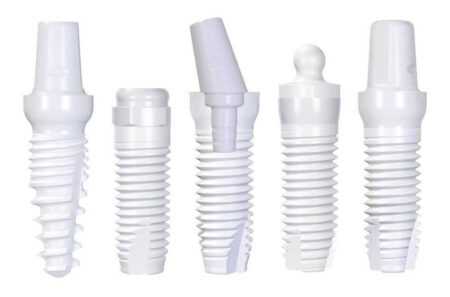 A white ceramic implant looks like a natural tooth root.
Osseointegration and healing
Zirconia ceramics are biocompatible materials. In addition, zirconia is a hypoallergenic material. Ceramic dental implants therefore eliminate even the extremely small likelihood of an allergic reaction to the implant.
Both types of implants achieve the highest degree of osseointegration and healing. In addition, ceramic dental implants attract and retain slightly less plaque and bacteria than titanium ones.
Price of a ceramic dental implant
Due to the very complex production process, a ceramic dental implant costs about twice as much as a titanium dental implant.
Book an appointment at Apolonija Dental Clinic by phone, via WhatsApp or using the contact form.
+385 1 4883 800 +385 91 4883 800