




Prevention is the key to healthy teeth, and cleaning your teeth of persistent tartar buildup is the simplest step you can take. It’s also one of the ways to make your smile more beautiful.
What is tartar and why should it be cleaned?
Dental tartar is often invisible on the teeth.
Teeth are constantly covered with a transparent layer made of saliva proteins and various impurities, food debris and bacteria. This transparent, easily removable layer is called plaque. Regular brushing and flossing will easily remove plaque.
If we do not brush our teeth regularly and if we do not brush all the surfaces of our teeth, even the hidden ones, plaque will mineralize, i.e. harden into a solid mass. This stubborn mass is tartar.
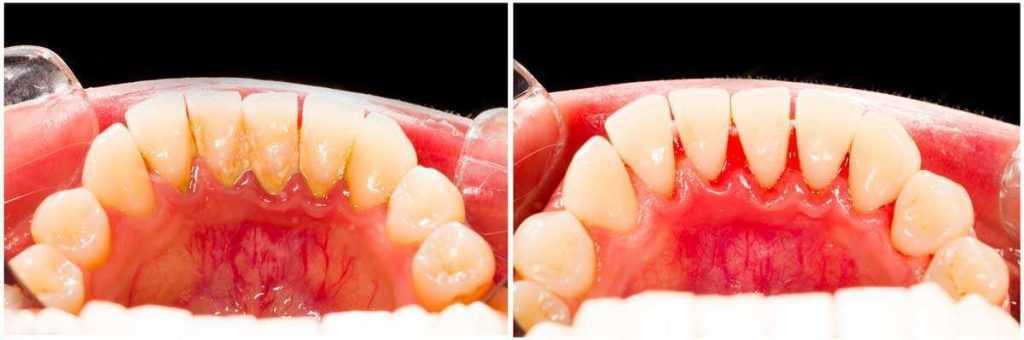
Not sure whether you need a cleaning? For most patients we recommend professional cleaning once or twice a year. We recommend it more often for people prone to tartar build-up, with periodontitis, during orthodontic treatment, during pregnancy and for smokers. We agree on the exact interval at your check-up.
Dangers of tartar to your health
Due to its composition, tartar is a favorable environment for the development of bacteria. The presence of tartar is a constant irritation of the gums, which ultimately leads to their inflammation. Thus, tartar favors the development of gum diseases such as gingivitis and periodontitis. While gingivitis is a sign of mild inflammation of the gums, periodontitis is a chronic disease that leads to severe tooth loss in many people today.
Can you remove tartar yourself?
Although many people get used to tartar buildup, there is no doubt that it is a harmful phenomenon that needs to be removed. Tartar cannot be removed by brushing harder, flossing or using toothpicks. Once hardened, tartar can only be removed with dental equipment.
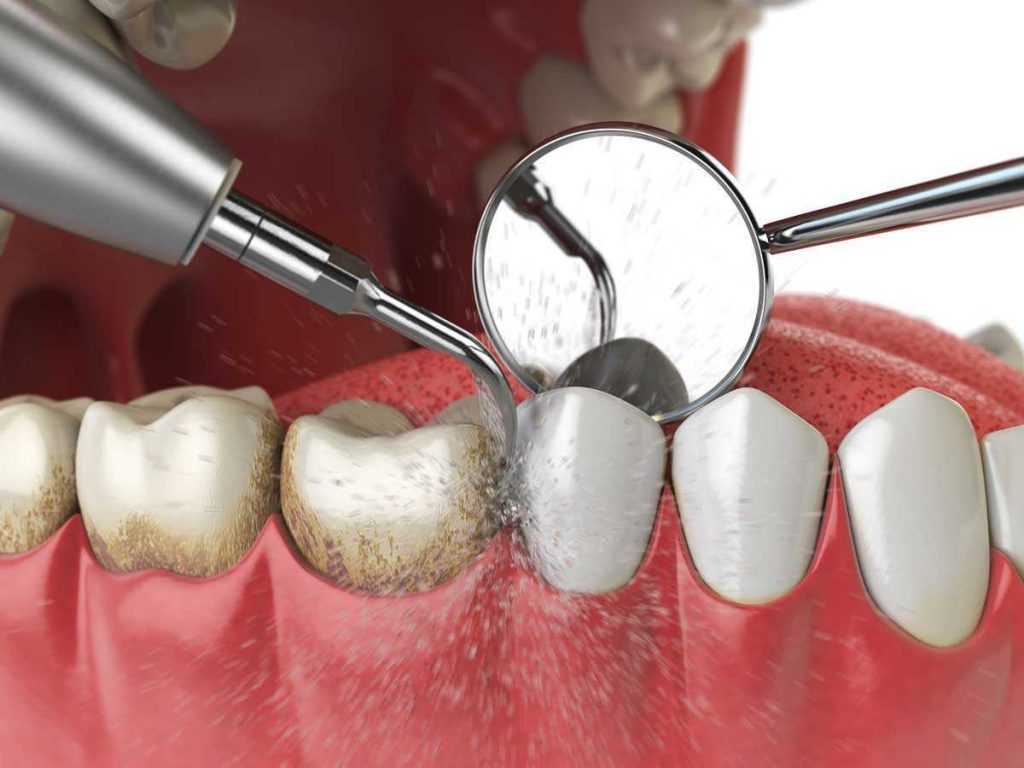
Prevention is the key to healthy teeth, and professional cleaning is the first step you can take.
If you have additional questions, feel free to contact us, or make an appointment for professional cleaning.
We believe that prevention should be available to everyone, which is why we have made the price as affordable as possible. The price for professional tartar removal is €60. Investing today means healthier teeth tomorrow – without pain, without complications, without unnecessary costs.
Guidelines, consensus reports and official positions of professional societies
Sanz M et al. (2020). Treatment of stage I–III periodontitis — the EFP S3 level clinical practice guideline. J Clin Periodontol. The highest-level (S3) guideline of the European Federation of Periodontology, based on 15 systematic reviews. The first step of therapy includes motivating the patient to successfully remove supragingival biofilm, controlling risk factors, and professional mechanical removal of plaque and calculus. Removal of supragingival biofilm and calculus is considered a key component of primary and secondary prevention of periodontitis, as well as the basis of gum disease treatment. https://onlinelibrary.wiley.com/doi/10.1111/jcpe.13290
Herrera D et al. (2023). Prevention and treatment of peri-implant diseases — the EFP S3 level clinical practice guideline. J Clin Periodontol. The corresponding guideline for patients with implants. Prevention begins at the implant planning stage, and regular professional maintenance is the foundation for preventing peri-implant mucositis and peri-implantitis. https://onlinelibrary.wiley.com/doi/10.1111/jcpe.13823
Weyant RJ et al. (2013). Topical fluoride for caries prevention: executive summary of the updated clinical recommendations and supporting systematic review. J Am Dent Assoc. An American Dental Association guideline based on 71 clinical trials. For people at elevated caries risk, professional application of 2.26% fluoride varnish or 1.23% fluoride gel every three to six months is recommended, together with home use of fluoride gel or mouthrinse for those over 6 years of age. For children under 6, only fluoride varnish is recommended. Recommendations and patient materials are also available on the association’s website. https://jada.ada.org/article/S0002-8177(14)60659-0/fulltext
https://www.ada.org/resources/research/science/evidence-based-dental-research/topical-fluoride-clinical-practice-guideline
Regular cleaning visits and long-term effect
Axelsson P et al. (2004). The long-term effect of a plaque control program on tooth mortality, caries and periodontal disease in adults. Results after 30 years of maintenance. J Clin Periodontol. The most important study on the long-term value of regular professional maintenance. More than 550 adults were followed for 30 years in a plaque control programme tailored to each patient’s needs. Over three decades, only 0.4 to 1.8 teeth per person were lost, and the main reason for tooth loss was root fracture — only 21 teeth were lost due to progression of periodontitis or caries. The mean number of new carious lesions was 1.2 to 2.1, and most sites showed no loss of attachment. https://pubmed.ncbi.nlm.nih.gov/15312097/
Lee CT et al. (2015). Impact of patient compliance on tooth loss during supportive periodontal therapy. J Dent Res. A systematic review and meta-analysis of the relationship between regular attendance at maintenance therapy and tooth loss. Patients who regularly attended check-ups and professional cleaning lost significantly fewer teeth than those who attended irregularly, which is why adherence to a maintenance programme is considered one of the most important factors for long-term success. https://journals.sagepub.com/doi/abs/10.1177/0022034515578910
Fee PA et al. (2020). Recall intervals for oral health in primary care patients. Cochrane Database Syst Rev. A Cochrane review on the optimal interval between check-ups in general practice. No clinically important differences in gum bleeding or caries were found between six-month and risk-based recall intervals in adults, which supports scheduling appointments individually according to the patient’s risk. Open access. https://www.cochranelibrary.com/cdsr/doi/10.1002/14651858.CD004346.pub5/full
Lamont T et al. (2018). Routine scale and polish for periodontal health in adults. Cochrane Database Syst Rev. Two studies with a total of 1,711 adult patients in general dental practice. In adults without severe periodontitis who attend check-ups regularly, routine scaling and polishing over two to three years made little or no difference to gingivitis or probing depths. Patients nevertheless consistently reported that their teeth felt cleaner. Together with the previous papers, it confirms that cleaning frequency should be determined according to risk. https://www.cochranelibrary.com/cdsr/doi/10.1002/14651858.CD004625.pub5/full
Air-polishing and biofilm removal
Abdulbaqi HR et al. (2022). Efficacy of erythritol powder air-polishing in active and supportive periodontal therapy: a systematic review and meta-analysis. Int J Dent Hyg. Eight randomised trials. Air-polishing with erythritol powder gave results comparable to hand and ultrasonic instruments in reducing probing depth and bleeding, with a significant additional gain in clinical attachment when used as an adjunct to active therapy. Microbiological findings were the same, but patients found air-polishing considerably less painful and tolerated it better. https://pubmed.ncbi.nlm.nih.gov/34318577/
Yuan ZL et al. (2025). Clinical effects of erythritol, glycine and trehalose as subgingival air-polishing powders on non-surgical periodontal treatment: a systematic review with meta-analysis of randomized controlled trials. Front Physiol. Nine randomised trials and 462 patients. In a direct comparison of erythritol, glycine and trehalose, no statistically significant difference in probing depth reduction was found, although erythritol was ranked slightly better. https://www.ncbi.nlm.nih.gov/pmc/articles/PMC12336208/
Divnic-Resnik T et al. (2022). The efficacy of the adjunct use of subgingival air-polishing therapy with erythritol powder compared to conventional debridement alone during initial non-surgical periodontal therapy. J Clin Periodontol. A randomised clinical trial on the added value of subgingival air-polishing with erythritol powder alongside conventional cleaning in initial non-surgical therapy. https://pubmed.ncbi.nlm.nih.gov/35373340/
Fluoridation and other preventive procedures
Marinho VCC et al. (2013). Fluoride varnishes for preventing dental caries in children and adolescents. Cochrane Database Syst Rev. Twenty-two randomised trials. Application of fluoride varnish two to four times a year, in both primary and permanent teeth, was associated with a substantial reduction in caries increment. The effect was present in populations with different caries risk and different exposure to other sources of fluoride. https://www.cochranelibrary.com/cdsr/doi/10.1002/14651858.CD002279.pub2/full
Walsh T et al. (2019). Fluoride toothpastes of different concentrations for preventing dental caries. Cochrane Database Syst Rev. A review of the effect of different fluoride concentrations in toothpastes. Standard family toothpastes contain about 1,000 to 1,500 ppm fluoride, and the choice of concentration should be matched to the other fluoride sources the patient uses and, in young children, to the risk of fluorosis. https://www.cochranelibrary.com/cdsr/doi/10.1002/14651858.CD007868.pub3/full
Correct toothbrushing
Rajwani AR et al. (2020). Effectiveness of manual toothbrushing techniques on plaque and gingivitis: a systematic review. Oral Health Prev Dent. Thirteen studies on the effectiveness of individual brushing techniques — Bass, modified Bass, Charters, Fones, circular, roll and others. No technique proved consistently better than the others at removing plaque and reducing gingivitis. The authors conclude that there is not yet enough evidence to recommend a single “best” technique, so it matters more that patients brush thoroughly and for long enough than which exact technique they use. https://www.ncbi.nlm.nih.gov/pmc/articles/PMC11654539/
Yaacob M et al. (2014). Powered versus manual toothbrushing for oral health. Cochrane Database Syst Rev. Powered toothbrushes reduce plaque and gingivitis more than manual ones, both in the short and the long term, with the strongest evidence for oscillating-rotating brushes. The clinical significance of this difference remains unclear, and the side effects recorded were localised and transient. https://www.cochranelibrary.com/cdsr/doi/10.1002/14651858.CD002281.pub3/full
Dağdeviren F et al. (2025). The effectiveness of power versus manual toothbrushes on plaque removal and gingival health in children — a systematic review and meta-analysis. Int J Dent Hyg. A more recent meta-analysis focusing on children who brush their own teeth, since only a small proportion of studies in the earlier Cochrane review included children and adolescents. There is moderate evidence that powered toothbrushes give children a small advantage in plaque removal over manual toothbrushes. https://www.ncbi.nlm.nih.gov/pmc/articles/PMC12516003/
