




The age when orthodontic treatment achieves the most
Once the most intensive growth period is over and most of the permanent teeth have erupted, we most often carry out orthodontic treatment with fixed braces. The aim of treatment is a well-formed upper and lower dental arch in harmonious relation to each other, proper function and a beautiful, attractive smile.
During adolescence the jaws and teeth are still growing, which allows us to make use of the natural flexibility of the bone and move teeth more easily and efficiently than in adulthood. If you have noticed that your child has an irregular bite or crooked teeth, do not wait too long to book an orthodontic examination.
For a teenager, the smile matters too. A review of studies on quality of life after orthodontic treatment before the age of eighteen showed an improvement, most pronounced in emotional and social well-being. Parents confirm this to us even without the research.
How to recognise orthodontic problems
Scroll →
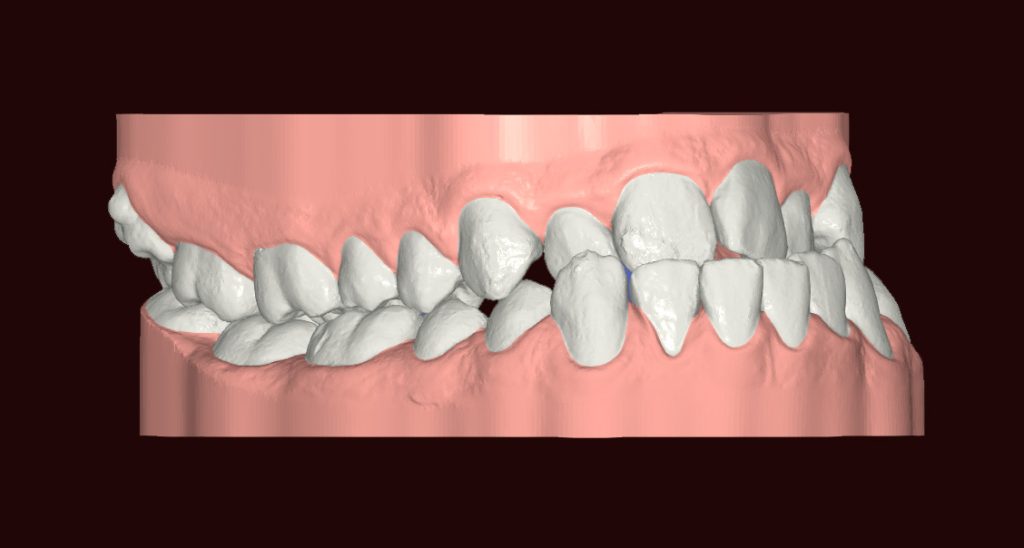
REVERSE BITE (PROTRUDING LOWER JAW)
When the lower front teeth overlap the upper front teeth in the bite. A reverse bite is most often caused by genetic factors, followed by uneven growth of the upper and lower jaw, bad oral habits in childhood that affect the growth and development of the jaws and teeth (e.g. thumb sucking, lip biting, etc.), and the loss of baby or permanent teeth, which causes the remaining teeth to shift.
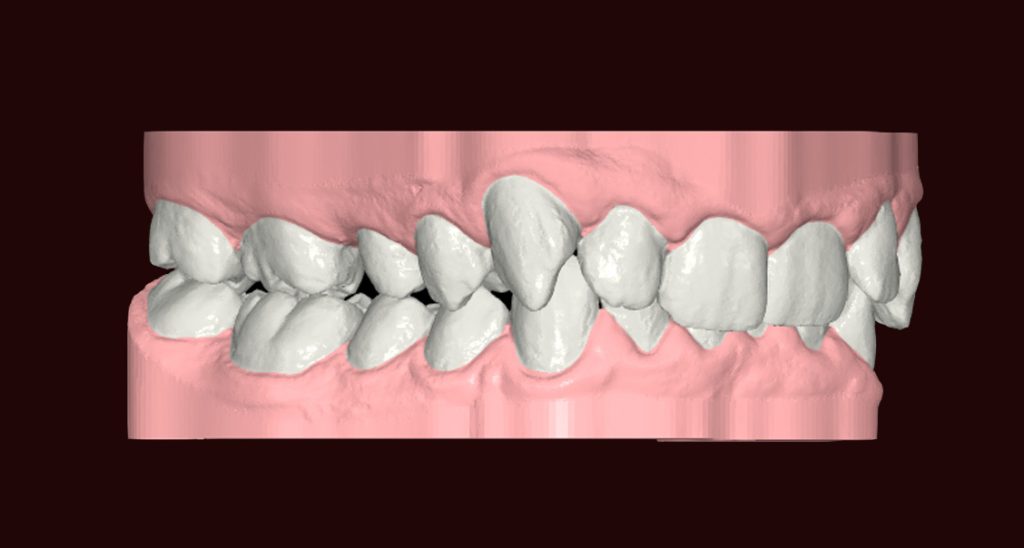
DEEP BITE
When the upper teeth overlap the lower teeth too much when biting, which can cause tooth wear and gum problems. It results from an imbalance in the growth and development of the upper and lower jaw, bad oral habits in childhood that affect the growth and development of the jaws and teeth (e.g. lip biting), and the loss of baby or permanent teeth, which causes the remaining teeth to shift.
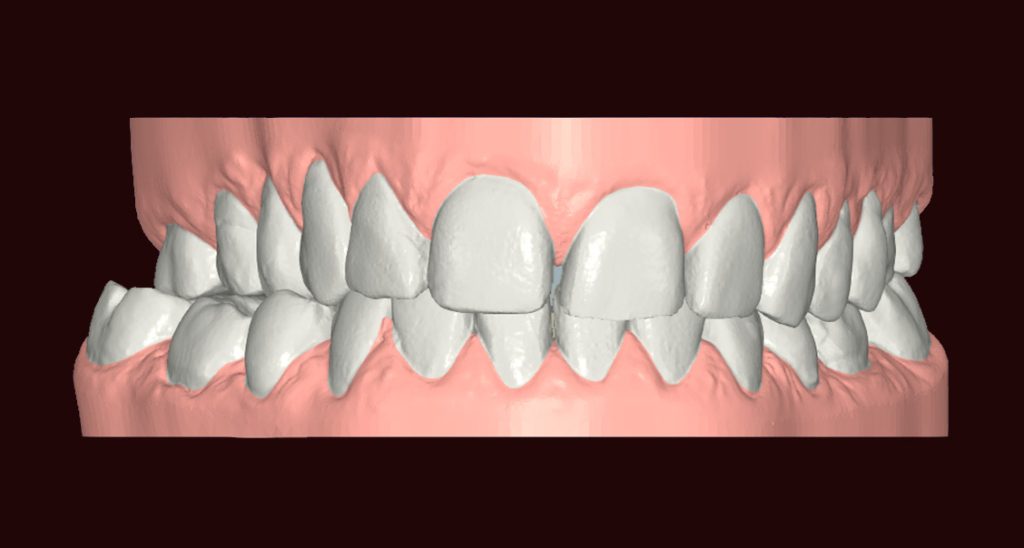
CROSSBITE
When the upper and lower teeth do not meet properly when biting, which can lead to an asymmetrical facial appearance. Instead of the upper teeth covering the lower ones, some upper teeth bite inside the lower ones, which can affect the front or back teeth, or even an entire side of the dental arch. It is caused by hereditary traits (the upper jaw is smaller than the lower), irregularities in the growth of the teeth and jaws (e.g. upper teeth tilted inwards) and bad oral habits in childhood (e.g. pushing the teeth with the tongue).
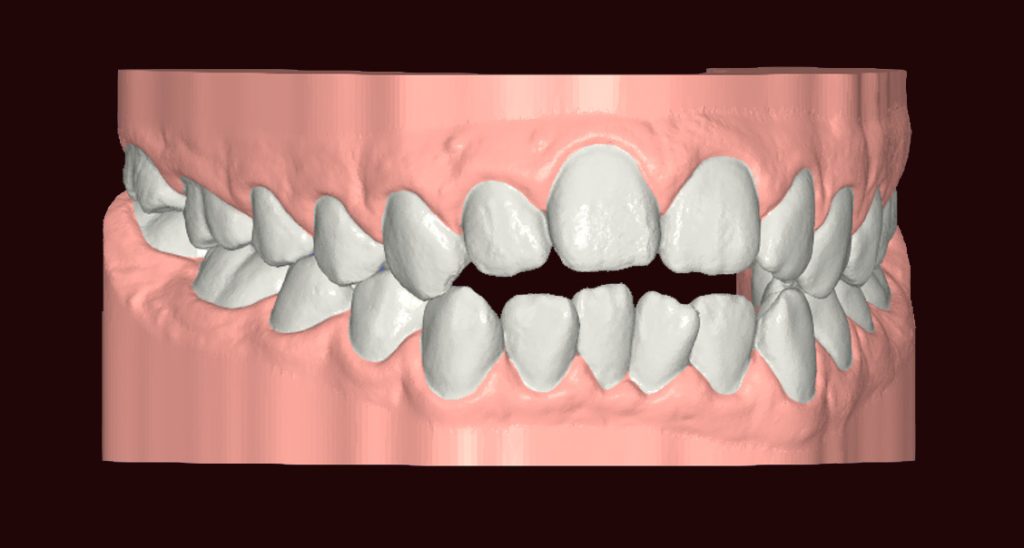
OPEN BITE
When the upper and lower teeth do not meet when biting, leaving an open space between them. It results from genetic factors, bad oral habits in childhood (such as thumb sucking, excessive dummy use or pushing the tongue against the front teeth), uneven growth of the upper and/or lower jaw or prolonged mouth breathing. An abnormal swallowing pattern with the tongue positioned between the teeth during swallowing is generally found with this malocclusion.
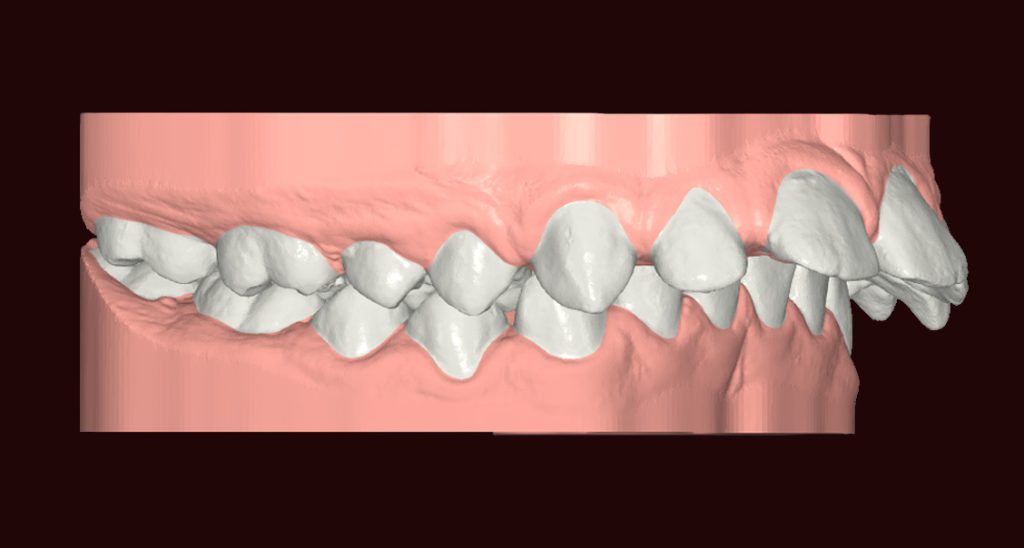
PROTRUSION (PROTRUDING UPPER JAW)
When the upper front teeth and the upper jaw protrude excessively forward while the lower jaw is set back, and the distance between the upper and lower jaw in the bite exceeds 3 millimetres. The most common causes of this malocclusion are genetic predisposition or bad oral habits in childhood such as thumb sucking.
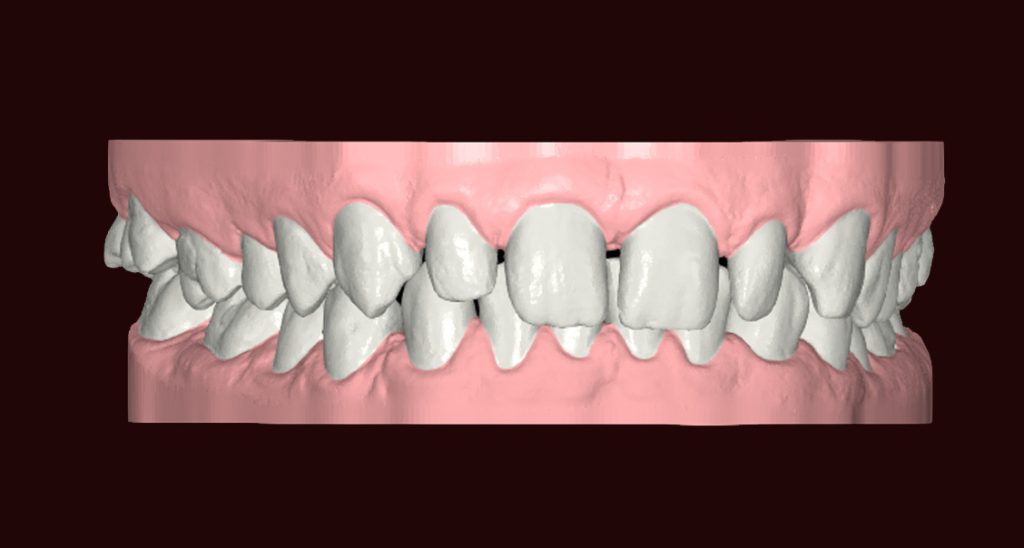
SPACED TEETH (DIASTEMA)
When there is too much room in the jaw for the teeth (the jaw is larger or the teeth are smaller), resulting in gaps between them. It can also be caused by missing permanent teeth that never developed or were extracted, which leads to the remaining teeth shifting and spreading apart because of the excess space.
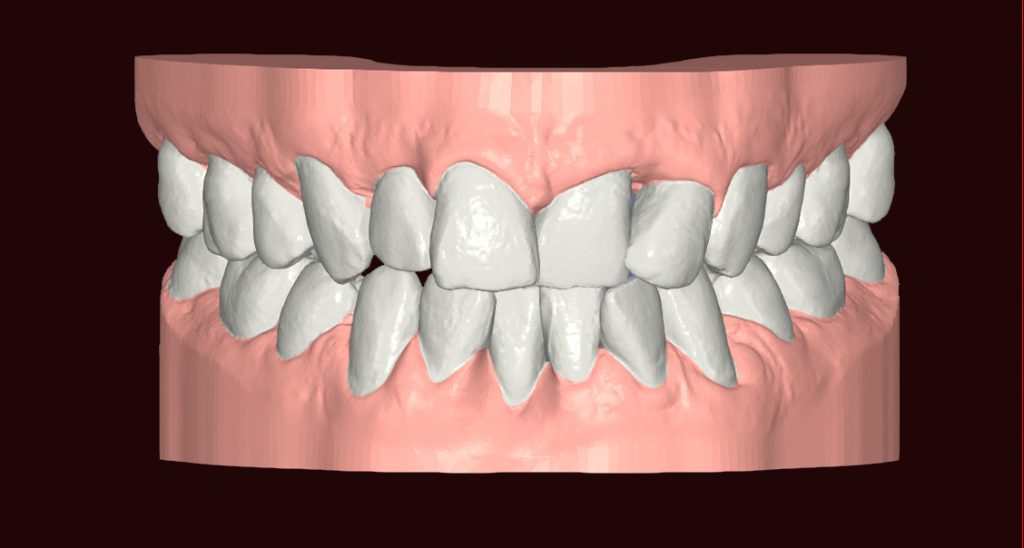
CROWDED TEETH
When there is not enough room in the jaw for all the teeth to fit properly, so they overlap. It is most often a matter of the relationship between tooth size and jaw size: either the teeth are too large, the jaw is too small, or a combination of both. In children, crowding of the permanent teeth can also be caused by the premature loss of baby teeth, or by their late loss, which blocks the natural eruption path of the permanent teeth.
Types of braces for teenagers
In the teenage years we most often use fixed braces, because they allow the most precise tooth movement and do not depend on whether someone remembers to put them in.
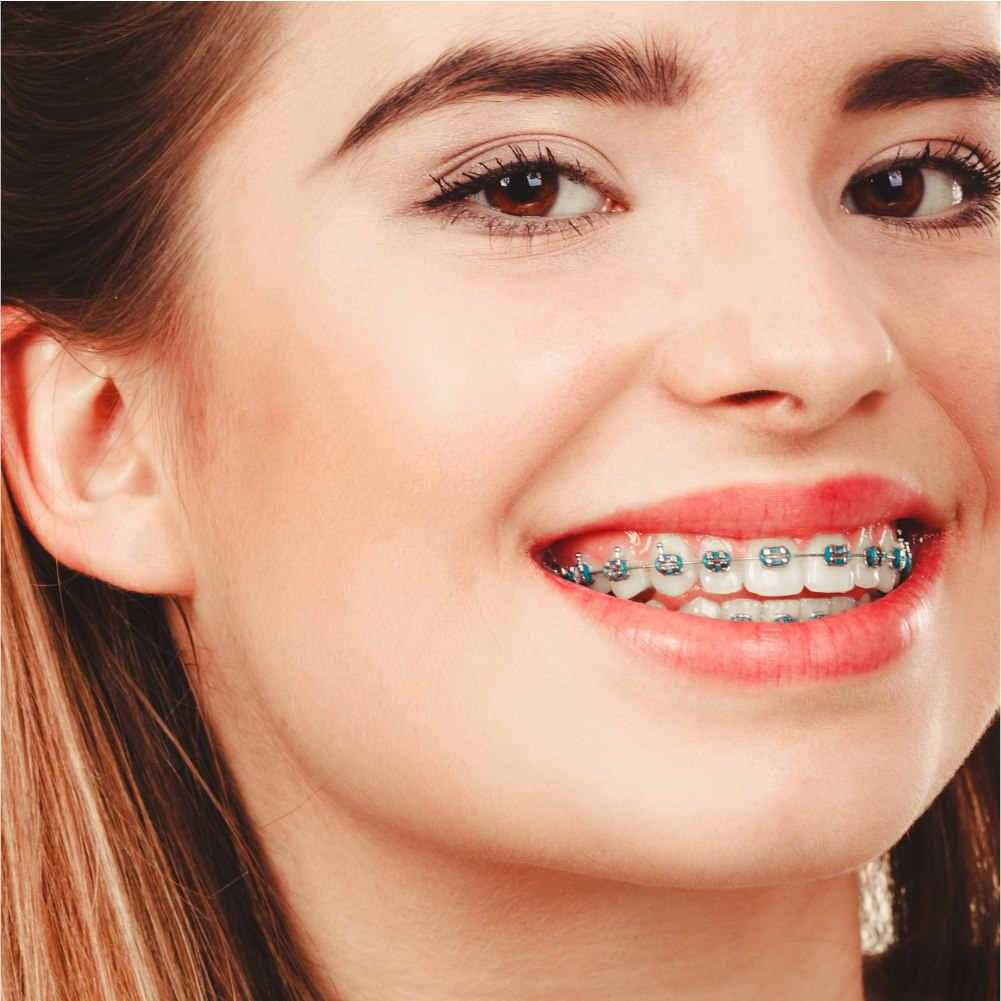
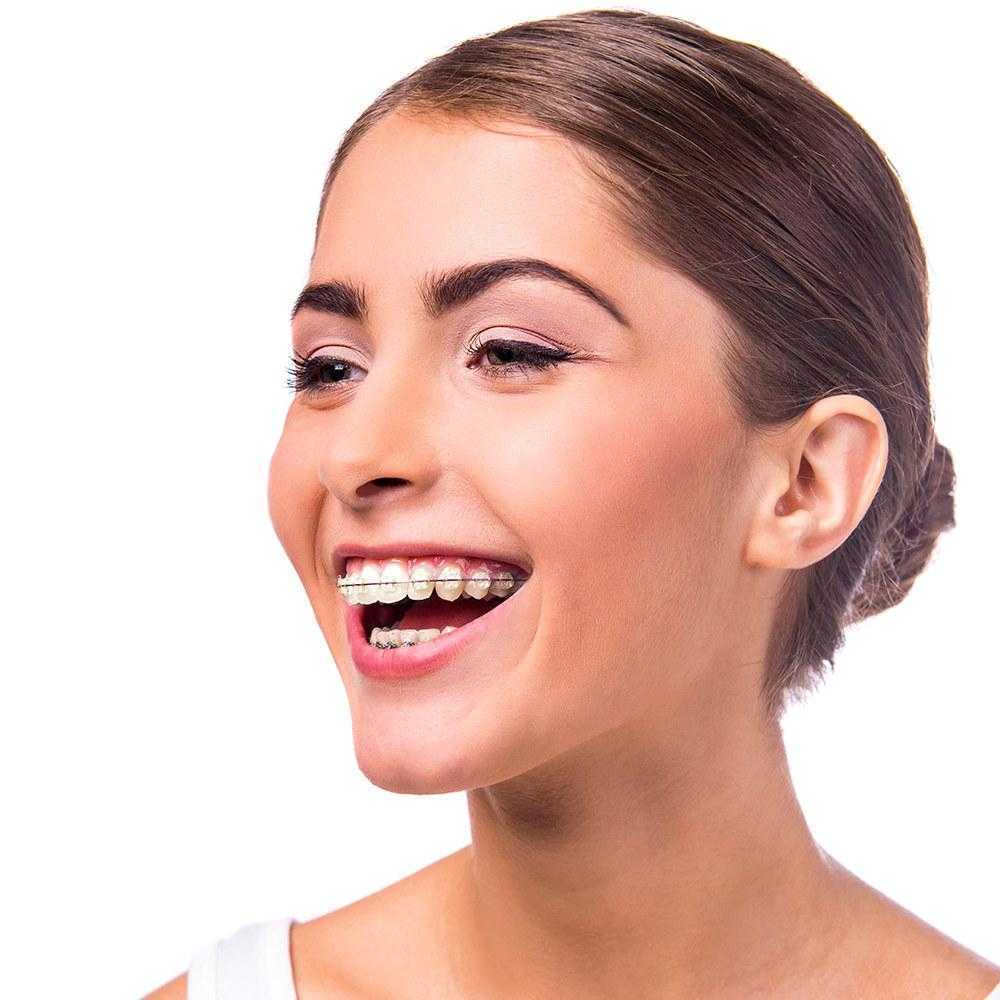
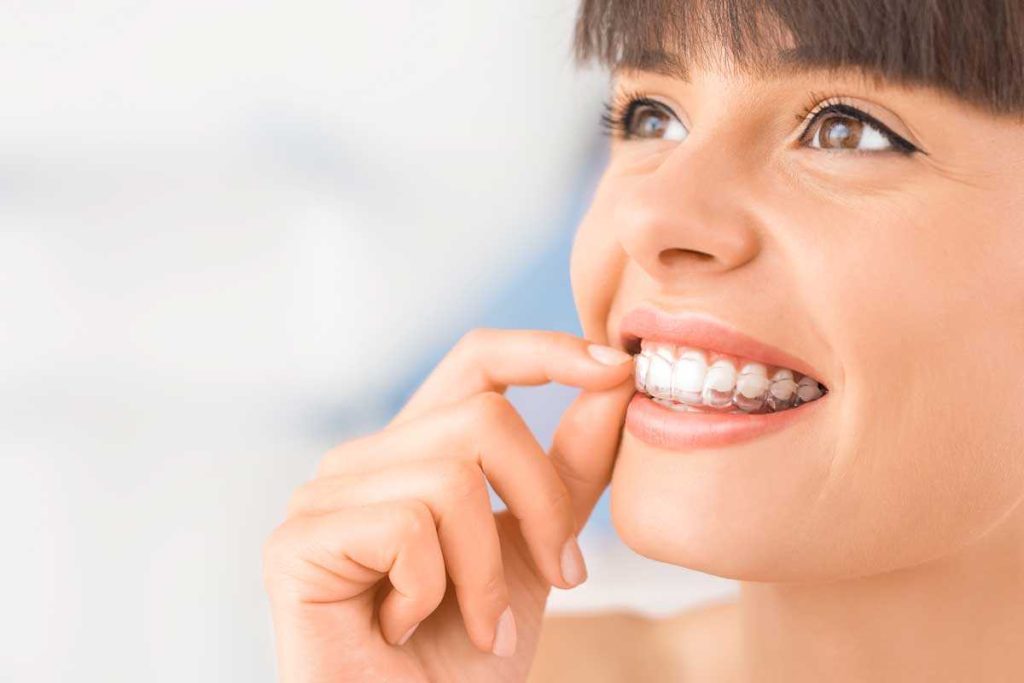
White, champagne or metal brackets – can you choose?
Brackets are only a tool the orthodontist uses to move teeth. The result of orthodontic treatment depends much more on the specialist leading it than on the type of bracket, so the choice is usually yours. In some cases, however, we recommend metal or champagne brackets, for example with severe crowding and large movements, where white brackets have their limitations.
In the teenage years, hygiene is the main issue
The most common lasting consequence of orthodontic treatment in teenagers is neither pain nor treatment length, but white spots on the enamel. They form where plaque collects around the brackets and can remain visible after the braces are removed. Some of the milder spots fade during the first year; more pronounced ones remain permanently. The good news is that they are predictable and can be avoided with consistent hygiene.
In addition, hormonal changes in the teenage years and slightly poorer hygiene easily lead to gum inflammation. We usually resolve these changes quickly, often in a single visit.
Caries in a young permanent tooth deserves special attention. The enamel of a newly erupted tooth is not yet fully mineralised, so decay progresses faster than in adulthood. Often only a tiny hole is visible on the surface, while extensive damage already exists underneath.
Frequently asked questions
Can my child eat everything? No. Hard and sticky food makes brackets come off. Every patient receives detailed written instructions on what to do during orthodontic treatment.
Can a teenager wear clear aligners? Yes, clear aligners are an option, provided the aligners really are worn 20 to 22 hours a day.
Is a retainer needed after braces? Yes. Retention is a mandatory part of orthodontic treatment.
Our orthodontic specialists will make an individual assessment for each child, determine the order in which identified growth irregularities are treated and set up individual orthodontic treatment. Early detection and treatment of problems can prevent long, more complex procedures in the future.
Quality of life and patient satisfaction
Javidi H et al. (2017). Does orthodontic treatment before the age of 18 years improve oral health-related quality of life? A systematic review and meta-analysis. Am J Orthod Dentofacial Orthop. Thirteen studies, six of them included in the meta-analysis. After orthodontic treatment, an improvement in overall oral health-related quality of life was recorded, most pronounced in the domains of emotional and social well-being. https://www.sciencedirect.com/science/article/abs/pii/S0889540616308927
Almasri AMH et al. (2024). Patient satisfaction following orthodontic treatment: a systematic review. Cureus. Fourteen studies with different questionnaires and different assessment times. Satisfaction levels were generally high, and most studies reported satisfaction above 91%. Fixed appliances were associated with higher satisfaction than removable ones. Age and sex did not significantly affect satisfaction, while quality of care and the doctor–patient relationship were key factors. https://pubmed.ncbi.nlm.nih.gov/39055972/
Choice of appliance and type of brackets
Papageorgiou SN et al. (2020). Treatment outcome with orthodontic aligners and fixed appliances: a systematic review with meta-analyses. Eur J Orthod. The most cited review on this topic. Clear aligners can achieve good results in selected cases, but in more complex malocclusions they lag behind fixed appliances in controlling tooth position and the final occlusion. https://doi.org/10.1093/ejo/cjz094
White spots on enamel (demineralisation around brackets)
Hussain U et al. (2025). Prevalence, incidence and risk factors of white spot lesions associated with orthodontic treatment: a systematic review and meta-analysis. Orthod Craniofac Res. Fifty-seven studies and 9,101 patients with a mean age of 16.4 years. A pooled estimate of the prevalence and incidence of white spot lesions and their risk factors, comparing conventional fixed appliances with other appliances and with untreated subjects. The most comprehensive source on the risk of demineralisation with fixed treatment, specifically in the teenage years. https://pubmed.ncbi.nlm.nih.gov/39717964/
Sonesson M, Twetman S. (2023). Prevention of white spot lesions with fluoride varnish during orthodontic treatment with fixed appliances: a systematic review. Eur J Orthod. Seven randomised trials and 666 patients. The incidence of white spot lesions at the time of debonding ranged from 12% to 55%. All studies favoured the use of fluoride varnish, and the pooled relative risk was 0.64 (95% CI: 0.42–0.98), indicating a statistically significant preventive effect. The authors note that the certainty of the evidence is low. The paper supports our protocol of more frequent check-ups and the use of fluoride products during treatment. https://www.ncbi.nlm.nih.gov/pmc/articles/PMC10505687/
Book an appointment at Apolonija Dental Clinic by phone, via WhatsApp or using the contact form.
+385 1 4883 800 +385 91 4883 800